
Why Does Pool Water Look Different?
November 3, 2026


Why the same Turquoise Pearl pool finish can create different shades of blue.
These two pools use the exact same finish…
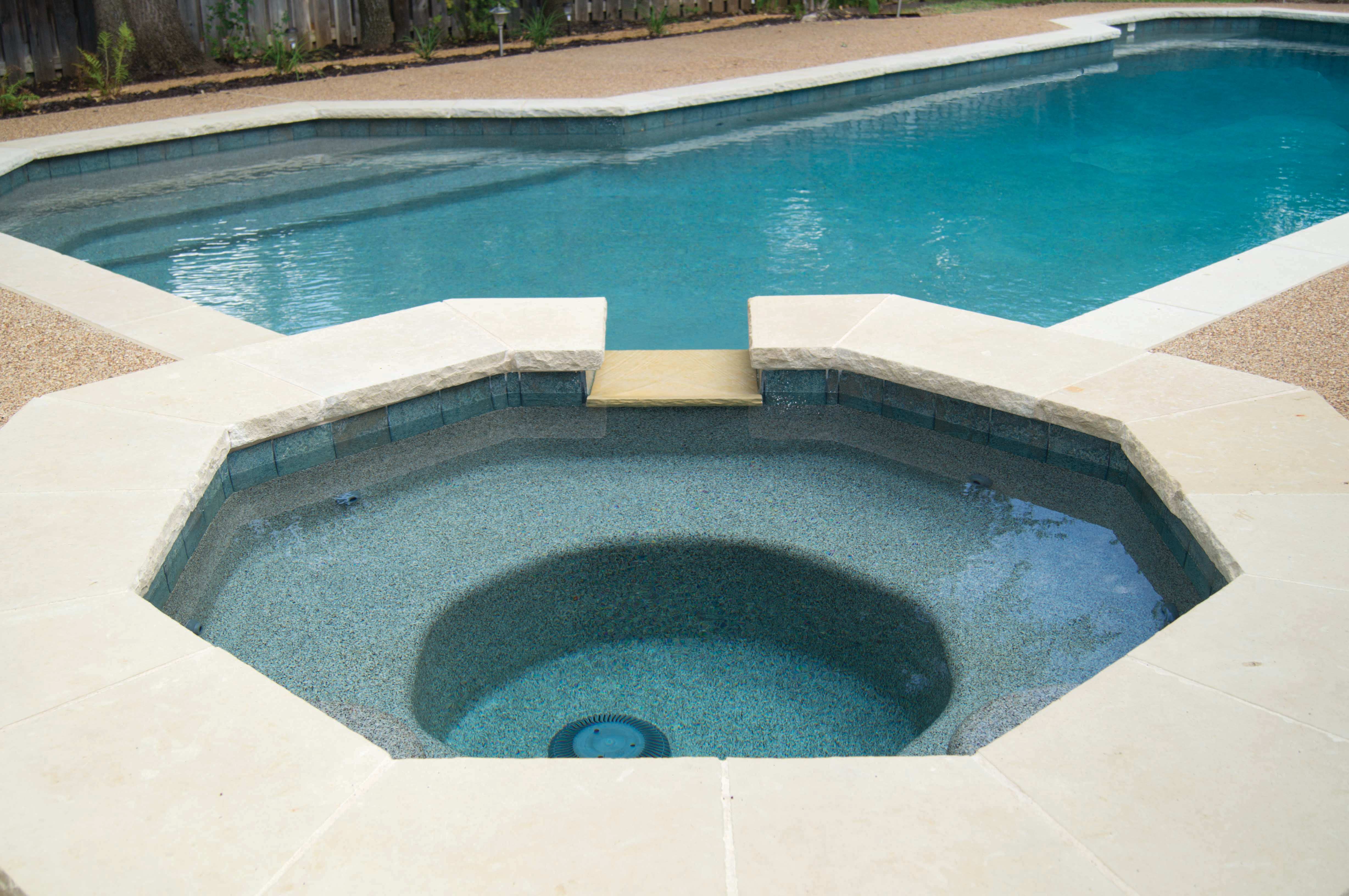
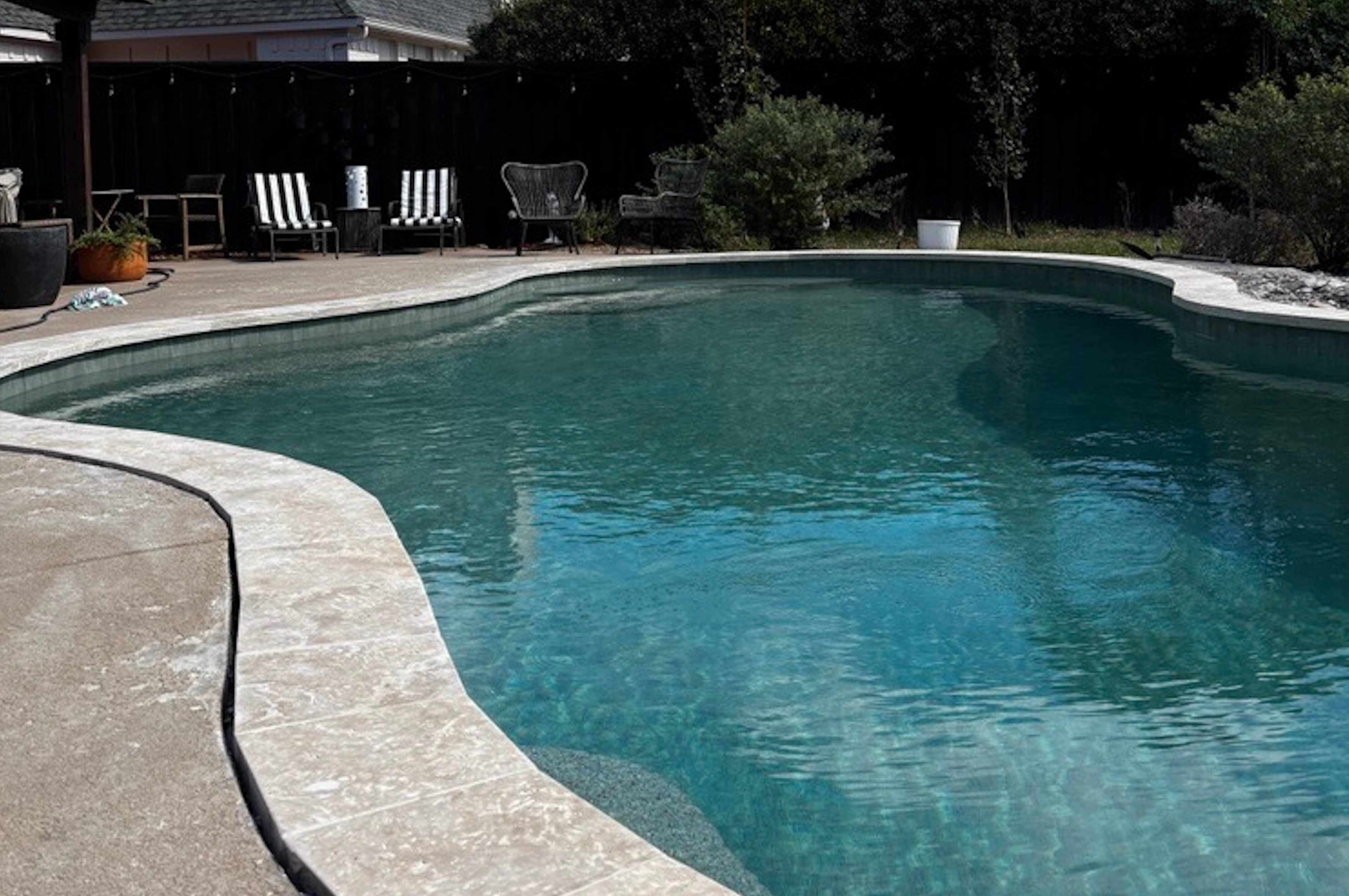
Both feature Turquoise Pearl from Noble Tile Supply’s Designer Series Pebble collection. Yet in these photographs, one reads as a rich teal, while the other looks brighter blue.
If you were choosing a finish from just one of these images, you might expect a very different result. Seeing them together reveals something every pool owner should understand: the finish is one part of what creates your pool water color.
Depth, waterline tile, sunlight, sky reflection, and the surrounding landscape all influence the view. Here’s how those elements work together, even when the finish stays the same.
Pool finish establishes the base color
The interior finish covers the pool’s walls and floor, making it a major influence on the color you see through the water. Its pigments and aggregate blend create the starting point for the finished look.
In these two pools, that starting point is the same: Turquoise Pearl. What changes is how the finish appears within each setting.
Water also has a subtle blue tint of its own because it absorbs more of the red portion of visible light. Add the pool’s depth and the day’s lighting conditions, and the same finish can take on a different appearance.
Waterline tile frames the water
Think about how a frame changes the way you see a photograph. Waterline tile plays a similar visual role around a pool.
A darker border can make the water feel more defined. A blue or aqua tile can echo tones within the water, while a contrasting tile creates a more distinct edge.
Because waterline tile covers a smaller area, its influence on the overall water color is usually more limited than the interior finish. Its color and contrast still matter to the complete design.
When selecting pool tile, compare it with the finish, coping, and decking together. That combination is what you’ll see from your backyard.
Depth gives the color more intensity
One pool can display several shades of blue before you ever compare it with another.
Look at a shallow step beside a deeper swimming area. In deeper water, light travels through more water before reaching your eye, changing how much light is absorbed. The color can appear more saturated.
A shallow tanning ledge may look pale and translucent, while a deeper area looks richer. When reviewing pool finish photos, consider which part of the pool you’re seeing. A close-up of a sun shelf offers a different preview than a view across the deep end.
Sky reflection adds another layer of blue
Some of the blue you see comes from the sky reflected on the water’s surface.
A clear sky can contribute blue reflections. Clouds can introduce softer, grayer tones. Your viewing angle changes the amount of surface reflection you see, too.
That means a pool can look different from a patio chair, an upstairs window, or directly at the water’s edge. Each position gives you a different balance of reflections and the view beneath the surface.
Sunlight changes the look throughout the day
The pool you photograph at noon may look different when you return that evening.
Direct sunlight can make the water appear bright and sparkling. Shade can soften its appearance, and moving shadows can create different tones across the same pool.
You can see areas of sunlight and shade in these pool photographs. They illustrate why it helps to review a finish under several lighting conditions.
Think about when you’ll spend the most time outside. Your morning coffee view and your late afternoon swim are both part of the design.
The surrounding landscape becomes part of the palette
A pool reflects its setting, from nearby trees to the structures around it.
Planting can contribute reflections and shade. Walls, fencing, and other nearby surfaces may appear on the water, depending on the angle. Coping and decking also surround the pool with colors that influence how you perceive the water.
In these photos, notice the different combinations of planting, tile, and surrounding stone. Those materials help give each pool its own character, even with the same Turquoise Pearl finish.
When planning your pool, bring samples of those surrounding materials into the conversation.
How to choose your pool water color with confidence
Use inspiration photos to identify what you love, then compare the materials and conditions behind that look.
Review several finished pools. Look at the same finish across different settings, depths, and lighting conditions.
Compare your full material palette. View the pool finish, waterline tile, coping, and decking together.
Discuss your specific setting. Share your pool’s planned depth, sun exposure, and landscape design with your builder and material supplier.
See the materials in person. Review samples outdoors and ask about wet samples or completed installations. A small sample provides only part of the picture.
Photography adds another variable. Camera settings, editing, and screen displays can change how colors appear, so treat an image as a useful reference rather than an exact color guarantee.
Explore Turquoise Pearl at Noble Tile Supply
Love the shades in these two pools? Start with Turquoise Pearl from our Designer Series Pebble collection, then explore the tile and surrounding materials that will complement your space.
Browse our pool tile collections, explore our Designer Series pebble finishes, or visit a Noble Tile showroom to compare your options in person.